
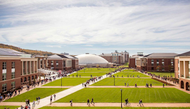
Case Study | Liberty University From Kitchens to Student Dining
Posted by Eco-Products on Oct 7th 2026
Campus Composting Case Study
How Liberty University Expanded Food Waste Composting From Kitchens to Student Dining
Liberty University and Sodexo expanded an on-campus composting program from kitchen preparation scraps to collected dining-hall organics. Eco-Products supported the team with operational guidance and options for compostable serviceware when reusable items were not available.

Case Study at a Glance
Organization
Liberty University
Industry
Higher Education & Campus Dining
Location
Lynchburg, Virginia
Program
On-Campus Food Waste Composting
Program Overview
Turning Dining Hall Food Scraps Into a Campus Resource
Liberty University serves thousands of residential students through large-scale dining operations in Lynchburg, Virginia. Its Reber-Thomas Dining Center opened in 2023, creating significant daily food preparation and post-meal organics streams. The university also has land and agricultural operations capable of making use of finished compost.
In early 2025, its campus composting effort began accepting kitchen preparation scraps alongside other organic inputs. Working with Sodexo dining staff, the university then expanded collection to post-consumer food waste during the fall 2025 semester. Eco-Products contributed technical conversations about efficient collection and the limited role of compostable packaging alongside reusable serviceware.
The Challenge
Collecting More Food Waste Without Disrupting a Busy Dining Operation
An all-you-care-to-eat dining environment generates food scraps at multiple points, from kitchen preparation to students returning trays. Collecting this material requires safe transport, clean separation and staff routines that fit meal service.
The dining operation primarily uses reusable plates and utensils. However, a small number of stations and equipment contingencies call for disposable packaging. Those backup items must fit the composting program instead of accidentally introducing nonaccepted material.
On-campus collection also created practical transport and labor questions: how to move the material from dining operations to the compost area efficiently, and how to equip and train staff to keep material clean.
The Solution
Build Collection in Phases and Align Reusable and Compostable Serviceware
Under campus compost operations supervisor Scott Jensen, the team began with a defined back-of-house stream: fruit and vegetable trimmings and other kitchen preparation scraps. The dining staff later expanded collection to food remaining on plates and trays, building on existing kitchen workflows.
An Eco-Products Product & Zero Waste specialist visited in April and November 2025, remained in contact with Jensen, and suggested equipment improvements, including evaluating a lift-gate box truck to improve the safety and efficiency of transporting collections. The original case study identifies this as guidance, not a completed equipment purchase.
Eco-Products also consulted on certified compostable packaging used at certain service stations or held as backup during maintenance interruptions. The emphasis remained on reusables for everyday dining, with disposable choices aligned to the campus organics pathway.
Make Composting Part of How Trays and Food Already Move
Rather than asking every student to make complex sorting decisions, the campus can collect food scraps through the dish return process and let trained Sodexo staff manage separation. Liberty later described how trays travel on a conveyor to the kitchen for sorting, helping keep nonfood items out of the compost stream. That operational design matters as much as the packaging itself.
Eco-Products Support
The Work Behind the Program
Eco-Products supported Liberty’s campus composting work through product knowledge and operations-focused collaboration rather than acting as the operator of the compost facility.
Program Walkthroughs
The Eco-Products specialist visited Liberty twice in 2025 to review evolving collection needs.
Collection Logistics
Recommended evaluating a lift-gate vehicle to help move heavy organics containers more safely.
Dining Team Education
Supported discussions after Sodexo staff toured the campus composting operation.
Packaging Contingencies
Helped the team maintain compostable backup options when reusable serviceware could not be used.
Processor Alignment
Discussed the relationship between collection quality and the material processed on campus.
Ongoing Coordination
Stayed connected with campus compost operations as collection expanded during 2025.
The Results
A Growing Campus Program With Measurable Waste Recovery
Nearly 200,000 lb
Composting material collected during the 2025–26 academic year as reported by Liberty in March 2026.
$100,000+
Reported campus savings across landscape materials, refuse removal and other expenses for the same period.
2 stages
Kitchen prep collection expanded to include post-consumer food waste.
Liberty University reported in March 2026 that since the beginning of the 2025–26 academic year its composting program had collected nearly 200,000 pounds of material, and that the university had saved more than $100,000 across landscaping inputs, refuse removal and related costs. These totals reflect the university’s broader organics operation and must not be represented as benefits caused solely by Eco-Products.
The source case study documents the practical shift from preparation scraps to front-of-house food waste and consistent collection through Sodexo dining operations. Eco-Products contributed advice and packaging support, while Liberty and Sodexo operated the collection system and managed its outcomes.
Lessons for Foodservice Teams
The Most Effective Dining Composting Programs Fit Existing Service Routines
Liberty’s experience demonstrates the value of starting with a stream that staff can separate reliably, then broadening collection after the team understands handling, transport and processing. Kitchen scraps offered that initial foundation.
It also shows that reusable serviceware and composting can complement each other. Compostable disposables serve a targeted purpose where needed, while the main impact comes from capturing food that otherwise would be discarded.
Three Practical Takeaways
- Start with a controlled stream: Use back-of-house food preparation scraps to establish collection routes and staff routines.
- Make the dish line work for the program: Use trained staff and existing food return workflows to manage post-consumer separation.
- Keep backup products aligned: Choose disposable serviceware for the occasions when reusables are not practical and verify acceptance locally.
Talk With Eco-Products About Your Composting Program
Exploring campus dining composting? Eco-Products can help evaluate serviceware choices and support practical organics collection planning with your team.
Contact Eco-Products