
How to Dispose of the Packaging our Products Come In
Posted by Eco-Products on Aug 6th 2026
Sustainability
Packaging is generally divided into three categories: primary, secondary, and tertiary
This article will focus on secondary packaging and provides guidance on how to dispose of it responsibly.

Packaging isgenerally dividedbythree categories:
Primary Packagingis the packaging that consumers directly use or interact with. For Eco-Products, the primary packaging includes items such as cups, plates, bowls, and cutlery.
Secondary Packagingis the packaging that groups, protects, or displays primary packaging. Examples for Eco-Products include product sleeves, cartons, and cardboard boxes.
Tertiary Packagingis the packaging used for transporting and handling products throughout the supply chain, typically seen upstream of the customer. Examples include pallets and shrink wrap.
The Importance of Proper Disposal
Proper disposal of secondary packaging plays an important role in reducing waste and supporting a more circular economy. Sorting materials into the correct waste streams help ensure that recyclable materials can be recovered and reused while minimizing contamination.
Every component of a secondary package serves a purpose – protecting products during shipping, providing product information, and ensuring items arrive safely. Once that purpose has been fulfilled, how those materials are disposed of becomes just as important.
By taking a few simple steps to sort secondary packaging correctly, you can help divert waste from landfills, conserve valuable resources, and support recycling efforts in your community.
The following guide outlines how to responsibly dispose of common packaging materials that may be included when you receive our products.
Plastic Product Sleeves
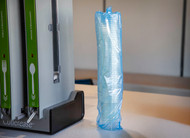
Most of our product sleeves are made with HDPE (high-density polyethylene) or LDPE (low-density polyethylene) film. While these plastic sleeves are highly recyclable, plastic film is not typically accepted in curbside recycling programs because it can become tangled in the sorting equipment at Material Recovery Facilities (MRFs), disrupting the recycling process.
Fortunately, there are many hard to recycle collection programs and store drop-off locations that accept plastic film, providing an avenue to recycle this material properly.
Paper Sleeves for our Aluminum Cups
Our aluminum cups are packaged in paper sleeves, which are typically accepted through most curbside recycling programs.
To recycle paper sleeves:
- Keep sleeves clean and dry
- Flatten the sleeve, if possible, to maximize space
- Place it in your paper recycling stream, or recycling bin, according to local guidelines
Recycling paper packaging helps recover valuable fiber that can be used to create new paper products and packaging materials.
cARDBOARD BOXES
Cardboard shipping boxes are among the most widely accepted and recycled packaging materials. If a box remains in good condition, consider reusing it before recycling. Extending the life of packaging through reuse helps maximize its value and reduce waste.
To properly recycle cardboard boxes:
- Remove all contents, packaging materials, and inserts.
- Break down and flatten the box,
- Remove as much excess tape, labels, or plastic packaging as possible
- Dispose of the removed tape, labels, and other non-recyclable materials in the trash.
- Place the flattened box in your recycling bin
Every Action Makes a Difference
Properly disposing of packaging may seem like a small action, but collectively it can have a significant environmental impact. By taking the time to sort product sleeves, cardboard boxes, and other recyclable packaging material into the correct waste streams, you can help keep valuable resources in circulation and support a more sustainable future.
Explore More Eco-Products Stories
Read about new products, waste diversion success stories, company news, and more.
Read More Stories