
Unpacking the Raw Materials that make Eco-Products Foodservice Packaging: Paper, Paperboard, Wood, and FSC Certification
Posted by Eco-Products on Apr 22nd 2026
We offer a variety of products that aim to balance environmental, performance, economic, and market needs. Our product offering is divided into three lines defined by raw material types and end-of-life potential. Our GreenStripe® line of products are primarily made with renewable raw materials such as sugarcane, corn, tree fiber, and wood, and designed for composting at end of life. This article will explore the paper, paperboard, and wood products in our GreenStripe® line.
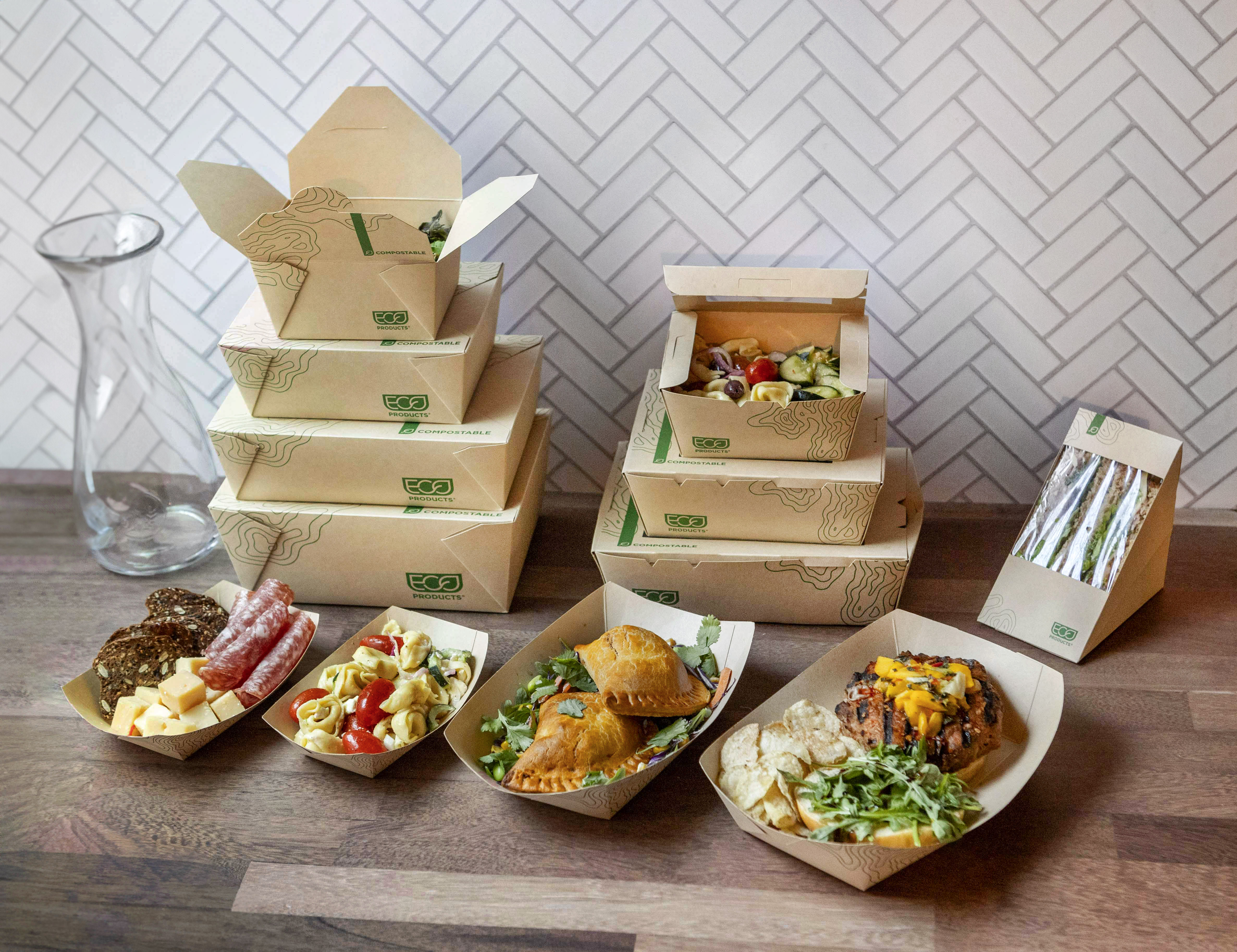
Paperboard provides strength and stability while remaining lightweight, so it's an ideal material for trays and boxes.
Raw Material
Paper
Paper is used for lightweight foodservice packaging applications such as carryout bags, wraps, and kraft paper sleeves. One of the more widely used paper types in foodservice packaging is kraft paper. Kraft paper is a strong, durable form of paper made by using longer wood fibers and minimal processing, offering reliable performance while maintaining a natural look and feel.
Paperboard
Paperboard is a rigid, paper-based material used in foodservice packaging. Common products include hot cups, cartons, trays, bowls, and takeout containers. Thicker and more structured than paper, paperboard provides strength and stability while remaining lightweight. When necessary, coatings and linings are added to enhance barrier performance. Many paperboard items in our GreenStripe® category are lined with PLA (polylactic acid), a bio-based material primarily derived from renewable raw materials. PLA linings help deliver liquid and heat resistance, while supporting compostability in commercial composting environments where facilities exist.
Wood
Wood is a renewable raw material used to make foodservice products like cutlery and stir sticks. Wood offers a durable, natural option for single-use applications that require rigidity and strength
Paper, Paperboard, and Wood Sources: Virgin & Recycled Material
Across paper, paperboard, and wood products, sourcing plays a critical role in determining overall environmental impact. These materials can be produced using virgin fiber, recycled fiber, or a combination of both. Recycled fiber helps reduce demand for new raw materials and keeps usable fibers in circulation.
Product Attributes and Characteristics
Paper, paperboard, and wood products in our GreenStripe® line are designed to meet a range of foodservice needs. These products include:
- PLA-lined paperboard hot cups (single and double wall)
- PLA-lined paperboard food containers, such as soup cups and bowls
- Paperboard trays and boxes
- Paper wraps and carryout bags
- Kraft Eco-Grip™ sleeves
- Paper cutlery and silverware bags
- Wood cutlery
- Wood stir sticks
When considered together, these materials give foodservice operators flexibility to choose packaging that best matches their menu, service style, and handling needs.
Paper works best for lightweight, flexible applications such as wraps, bags, and sleeves, particularly for dry or low-moisture foods. Its thinner construction supports quick handling and easy folding, making it well suited for fast-paced service environments.
Paperboard is a strong choice for foods and beverages that require added structure, durability, and insulation, including hot and cold items and complete to-go meals. It performs reliably across a range of food types and supports high-quality printing, enabling clear branding and messaging.
Wood is well suited for simple, single-use items that require rigidity, such as cutlery and stir sticks. It offers a durable, plant-based option for packaging that must hold their shape during use, while providing a familiar, natural material choice.
Beginning-of-Life (BOL) Certification Options
The environmental impact of these raw materials depends on fiber sourcing, recycled content, and responsible forest management practices. Consumers increasingly expect brands to ensure their paper products do no contribute to deforestation.
FSC is the leading global standard for responsible forest management. FSC certification ensures that:
- Forests are managed with environmental, social, and economic responsibility
- Wood fiber is traceable from forest to finished product through a strict Chain of Custody system
FSC is widely recognized, making it a powerful trust signal on packaging.
There are three types of FSC labels for paper and wood products, which help consumers understand the fiber source.
| FSC Label | What it Means |
 |
FSC 100% All fiber comes from responsibly managed, FSC-certified forests. |
 |
FSC Mix The product is made with a mixture of materials from FSC-certified forests, recycled materials, and/or FSC-controlled wood. |
 |
FSC Recycled The product is made with 100% recycled materials. |
Eco-Products has been working toward transitioning to FSC-certified paperboard and wood products for many years, and we’ve made significant progress.
Existing: Our wood cutlery, paper cutlery, food boxes, food trays, paper sacks, kraft Eco-Grips, and silverware bags have long been made from FSC-certified raw materials.
Coming Soon: We are currently in the midst of transitioning all single- and double-wall hot cups, soup cups, squat bowls, and paper clamshells across Eco-Products and Vegware-US to FSC-certified paper, with expected completion in Summer 2026.
Next Steps: We will evaluate the feasibility of transitioning our deli bags and wraps, french fry scoop, and stir sticks to FSC-certified substrates.
In 2025, 27% of Eco-Products paperboard purchases were of FSC-certified paperboard.
By the end of 2025, 48% of applicable Eco-Products paper, paperboard, and wood SKUs are FSC-certified. The plan from here is growth!
End-of-Life
Depending on how paper, paperboard, and wood products are manufactured and what other raw materials they are combined with, these products may be composted or recycled at the end of life. Most Eco-Products GreenStripe™ paper and paperboard products are BPI certified as compostable, and all wood-based products are substrate-accepted. You can read more about the end-of-life preferences for our Certified Compostable Products in this story, which includes more information about composting and recycling options for our products.
Interested in learning more about the other raw materials used to make our products? Check out the other articles in this series.
Unpacking the Raw Materials used to make Eco-Products Foodservice Packaging: Bioplastics