
Unpacking the Raw Materials used to make Eco-Products Foodservice Packaging: Aluminum Cold Cups
Posted by Eco-Products on Jul 14th 2026
Raw Materials
Unpacking Aluminum Cold Cups: Recycled Content, Performance, and End-of-Life
A closer look at the recycled aluminum, product performance, certification pathways, and recycling potential behind Eco-Products BlueStripe™ aluminum cold cups.
Posted by Eco-Products

Material Overview
Why Aluminum Works for Cold Beverage Service
Aluminum is a lightweight, highly recyclable, and durable material. Its strength and corrosion resistance make it well suited for foodservice applications such as cold beverage cups.
A key advantage of aluminum is its ability to incorporate recycled content without compromising product quality. Aluminum can be recycled repeatedly without degrading its properties, making it a strong material for circular systems.
Recycled Content
Made With 90% Recycled Aluminum
Eco-Products aluminum cold cups are made with 90% recycled aluminum. According to Novelis, the recycled aluminum used in the cups comes from two sources:
- Post-consumer recycled material: Material recovered from used beverage cans that have been used by consumers and collected through recycling systems.
- Post-industrial recycled material: Pre-consumer scrap generated by downstream customer operations, including closed-loop scrap or material mixed with market scrap.
Both post-consumer and post-industrial recycled material reduce the need for virgin aluminum. Post-consumer material from used beverage cans plays a particularly important role by diverting material from the waste stream and supporting end-market demand for recycling systems.
It is also important to distinguish post-industrial recycled material from internal “run-around scrap.” Material reprocessed within the same manufacturing operation is considered production efficiency and is not classified as recycled content.
Product Performance
Designed for High-Volume Environments
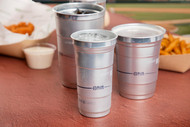
Eco-Products BlueStripe™ aluminum cold cups provide a durable, high-quality option for cold beverage service. The line includes 12 oz, 16 oz, 20 oz, and 24 oz sizes, giving operators flexibility across drink types and service environments.
Premium Presentation
The metallic finish and BlueStripe design create an elevated look for premium seating, bars, events, and hospitality settings.
Clearer Bin Decisions
The material’s visual distinction can help guests and staff identify the cups as aluminum and sort them more accurately.
Easy Collection
The cups can fit into existing aluminum recycling collection systems where accepted locally.
Heat Resistance
Aluminum maintains its structure in warm and outdoor environments and will not melt, warp, or soften in hot weather.
Sturdy Performance
The rigid construction supports refills and extended use during events.
Supports Circularity Goals
High recycled content and recyclability can support diversion and circularity initiatives where recovery systems exist.
Verification
Beginning-of-Life Certification Options
Beginning-of-life certifications help verify how aluminum is sourced and produced, including recycled content and chain of custody. Because aluminum is new to the Eco-Products product portfolio, these cups do not currently have a beginning-of-life certification. Eco-Products will work with suppliers toward obtaining the appropriate certification for this material.
Third-party certifications can help validate recycled-content percentages, improve transparency, and provide a consistent framework for measuring claims.
- Aluminium Stewardship Initiative: A global standards and certification program focused on responsible production, sourcing, and chain of custody across the aluminum value chain.
- SCS Global Services: A third-party certification that verifies pre-consumer and post-consumer recycled content.
- UL Solutions: A third-party certification that evaluates total recycled content, including pre-consumer and post-consumer material.
End-of-Life
Why Aluminum Has Strong Recovery Potential
Aluminum can be recycled repeatedly without losing quality, which helps make it one of the most valuable materials in the recycling stream. The Aluminum Association reports that aluminum represents only 3% of the weight but approximately 30% of the value in residential recycling bins for single-family households in the United States.
Because aluminum is durable, widely accepted in many curbside programs, and valuable to recover, it can remain in circulation for long periods of time. It is estimated that 75% of the aluminum ever produced is still in use today.
Recycling aluminum also uses approximately 95% less energy than producing primary aluminum, resulting in substantially lower greenhouse gas emissions.
In foodservice settings, aluminum’s economic value and established end markets can support stronger recovery outcomes. Cold beverage cups are also generally less affected by food residue than many other foodservice items, which can improve their potential for recovery when collection systems are available.
Eco-Products aluminum cold cups are part of the BlueStripe™ line, helping create end-market demand for recycled materials and support aluminum recycling markets.
What to Remember
- The cups are made with 90% recycled aluminum.
- The line includes 12 oz, 16 oz, 20 oz, and 24 oz sizes.
- Aluminum can be recycled repeatedly without losing quality.
- Local recycling acceptance and proper collection still determine end-of-life outcomes.
- Third-party certification can help verify recycled-content and sourcing claims.
Explore More Raw Material Articles
Learn more about the other raw materials used across the Eco-Products portfolio.
Sources
Novelis Recycled Content White Paper
International Aluminium Institute: Recycling Energy and Emissions Savings
International Aluminium Institute: Aluminum Still in Use Today
Explore More Eco-Products Stories
Read about new products, waste diversion success stories, company news, and more.
Read More Stories